
Building a working prototype with AI vibe coding tools like Cursor, Replit Agent, or Lovable is thrilling. In a matter of hours, you have clickable buttons, working API calls, and a live deployment on Vercel or Netlify.
However, there is a vast gulf between "It works on my browser" and "Production-Grade Enterprise Software".
When real users begin using your app, they will attempt unexpected user flows, upload malformed files, lose network connectivity mid-request, and test your system against malicious inputs. If your app isn't hardened for production, you risk data corruption, security breaches, user churn, and embarrassing downtime.
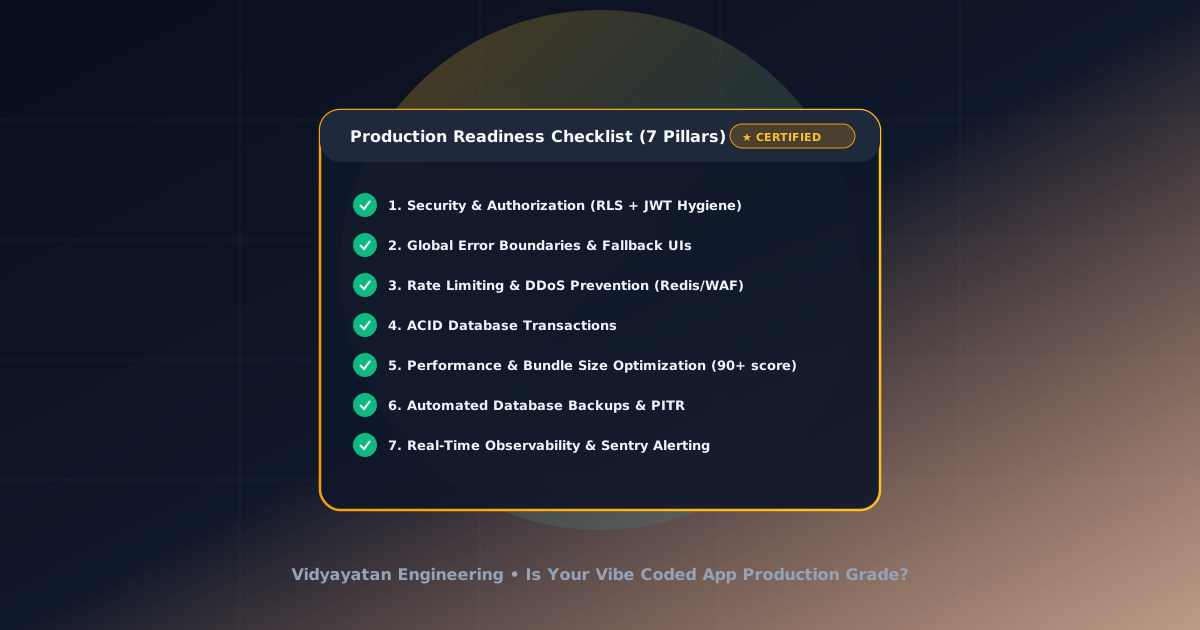
Here is the definitive 7-Point Production Readiness Checklist every founder must run before launching their vibe-coded app.
The 7-Point Production Readiness Checklist
1. Security & Authentication Hygiene
AI assistants frequently write code that exposes environment variables or omits essential authorization checks. Verify the following:
- Row Level Security (RLS) & Authorization: Ensure users can only read and write their own database rows. Never rely solely on frontend hidden buttons to protect sensitive admin actions.
- Environment Secrets Management: Verify
NEXT_PUBLIC_or public frontend variables do not leak secret API keys (e.g. OpenAI API keys, Stripe Secret Keys, AWS credentials). - CORS & CSRF Policies: Restrict API routes to allow requests only from your explicit production domain.
// BAD: Insecure route created by quick AI prompting
export async function DELETE(req: Request) {
  const { userId } = await req.json();
  await db.user.delete({ where: { id: userId } }); // Anyone can delete any user!
  return Response.json({ success: true });
}

// GOOD: Production-grade authenticated route
import { getSession } from "@/lib/auth";

export async function DELETE(req: Request) {
  const session = await getSession();
  if (!session || session.user.role !== "admin") {
    return new Response("Unauthorized", { status: 401 });
  }

  const { userId } = await req.json();
  await db.user.delete({ where: { id: userId } });
  return Response.json({ success: true });
}
2. Global Error Boundaries & Graceful Degradation
In vibe-coded apps, an unhandled API error often causes the entire React application to crash into a white screen of death.
- Add top-level React Error Boundaries with user-friendly fallback UIs and reload options.
- Wrap all async API fetch calls in
try...catchblocks with explicit user toast notifications rather than silent failures.
3. Rate Limiting & DDoS Protection
Prevent malicious bots or unintended infinite loops from blowing up your cloud hosting bill:
- Implement rate limiting (e.g. via Upstash Redis or Cloudflare WAF) on authentication endpoints (
/api/login), password resets, and expensive AI generation routes. - Enforce strict request body size limits on file upload routes.
4. Database Transactions & Data Integrity
When performing multi-step operations (e.g. processing a payment AND updating user subscription status AND generating an invoice), ensure they are wrapped inside an ACID Database Transaction.
Without transactions, a failure midway through the operation leaves your database in a corrupt, half-updated state.
// Ensuring atomic transaction for payment processing
await db.$transaction(async (tx) => {
  const invoice = await tx.invoice.create({ data: invoiceData });
  await tx.subscription.update({
    where: { id: subscriptionId },
    data: { status: "ACTIVE", currentPeriodEnd: nextBillingDate },
  });
  await tx.auditLog.create({ data: { event: "PAYMENT_SUCCESS", invoiceId: invoice.id } });
});
5. Performance Budgets & Bundle Optimization
AI coding tools tend to import heavy JavaScript libraries for simple tasks (e.g., importing all of lodash for a single array filter, or using unoptimized 5MB PNG images).
- Audit your client JavaScript bundle using
@next/bundle-analyzer. - Serve images in modern WebP / AVIF formats with explicit
widthandheightattributes to eliminate Layout Shift (CLS). - Aim for a Lighthouse Performance Score of 90+ on mobile and desktop.
6. Automated Database Backups & Point-in-Time Recovery
If your database becomes corrupted or corrupted by a faulty migration, how quickly can you recover?
- Enable Point-in-Time Recovery (PITR) on your database host (AWS RDS, Supabase, Neon, or Railway).
- Perform a dry-run restoration test once every month to verify backup integrity.
7. Observability, Logging & Alerting
Production-grade software notifies you when something breaks, before your customers complain on Twitter or LinkedIn.
- Configure real-time alerts in Sentry, Datadog, or Better Stack for HTTP 500 errors.
- Implement structured JSON logging on serverless handlers for easy searching and debugging.
Production Readiness Summary Matrix
| Pillar | Vibe Prototype State | Production-Grade Standard |
|---|---|---|
| Security | Hardcoded secrets, missing RLS | JWT expiry, RLS enabled, KMS secret storage |
| Resilience | White screen on component error | React Error Boundaries with graceful fallbacks |
| API Protection | Unprotected endpoints | Rate limited via Redis / Cloudflare WAF |
| Data Integrity | Isolated non-atomic queries | ACID transactions & foreign key constraints |
| Backups | No automated backups | Daily automated PITR with restoration verification |
Get a 48-Hour Production Hardening Audit by Vidyayatan
Preparing to launch your vibe-coded app to paying customers, launch on Product Hunt, or pitch enterprise clients? Don't leave your launch to chance.
Vidyayatan provides a comprehensive 48-Hour Production Audit & Hardening Service:
- Security Vulnerability Scan: Penetration testing on API endpoints, authentication flows, and secret exposures.
- Database & Query Hardening: Index optimization, connection pool tuning, and transaction verification.
- Performance Optimization: Bundle size reduction, Core Web Vitals optimization, and edge caching implementation.
- Production Certification: Detailed report with patched security flaws and certification of production readiness.
Ensure Your Launch is Flawless
Turn your AI vibe prototype into a hardened, secure enterprise product that customers trust and investors back.